TRAINING DATA FOR PHYSICAL AI

How Robots Learn from Industrial Work

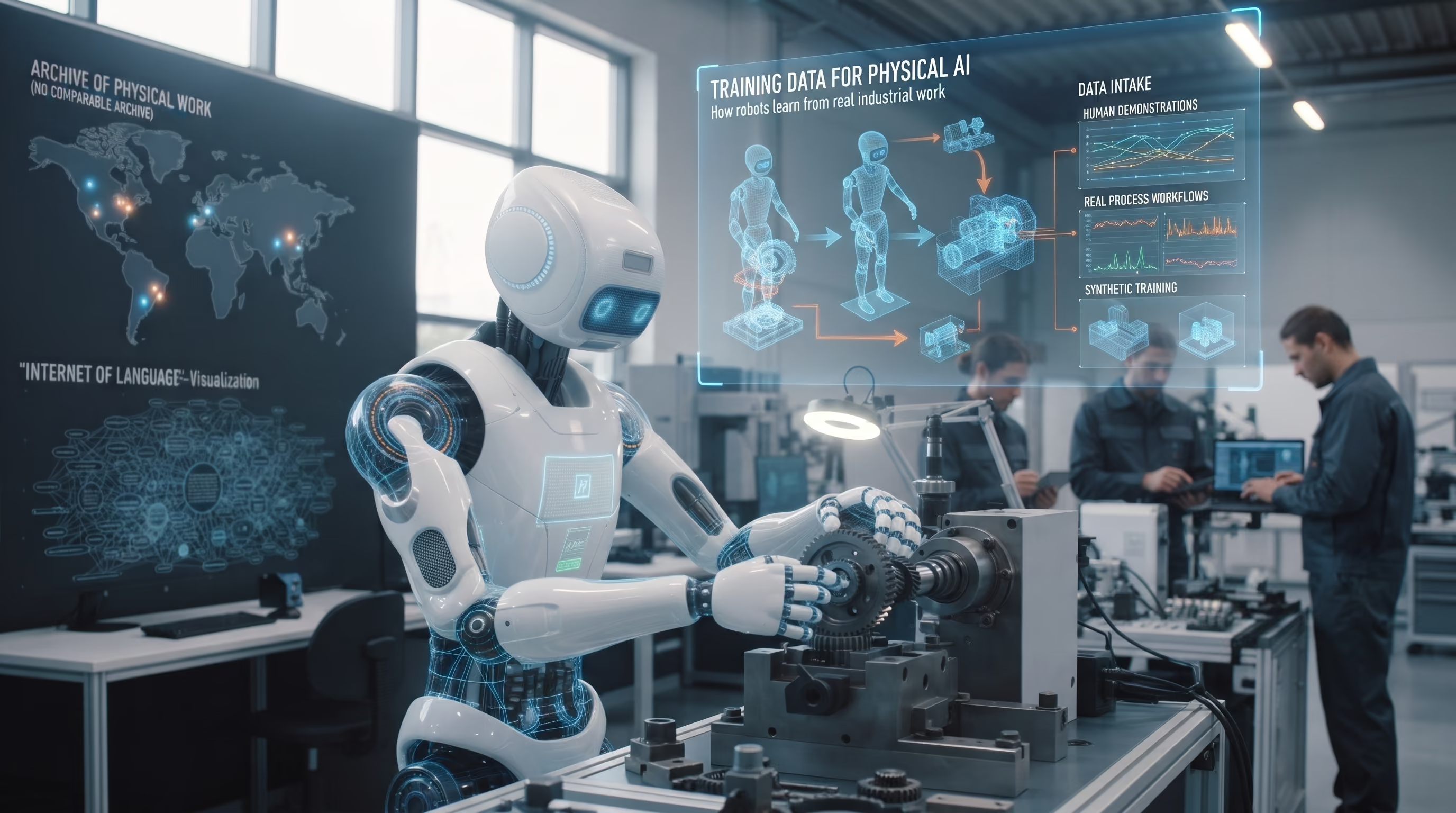
Training data for Physical AI consists of recorded movements, actions, and process workflows from which robotics models learn to perform physical tasks. This is considered the industry's biggest bottleneck: while the internet provides a vast archive for language, no comparable repository exists for physical labor.

5 min read
THE LIMITING FACTOR

Why is Data the Bottleneck for Physical AI?

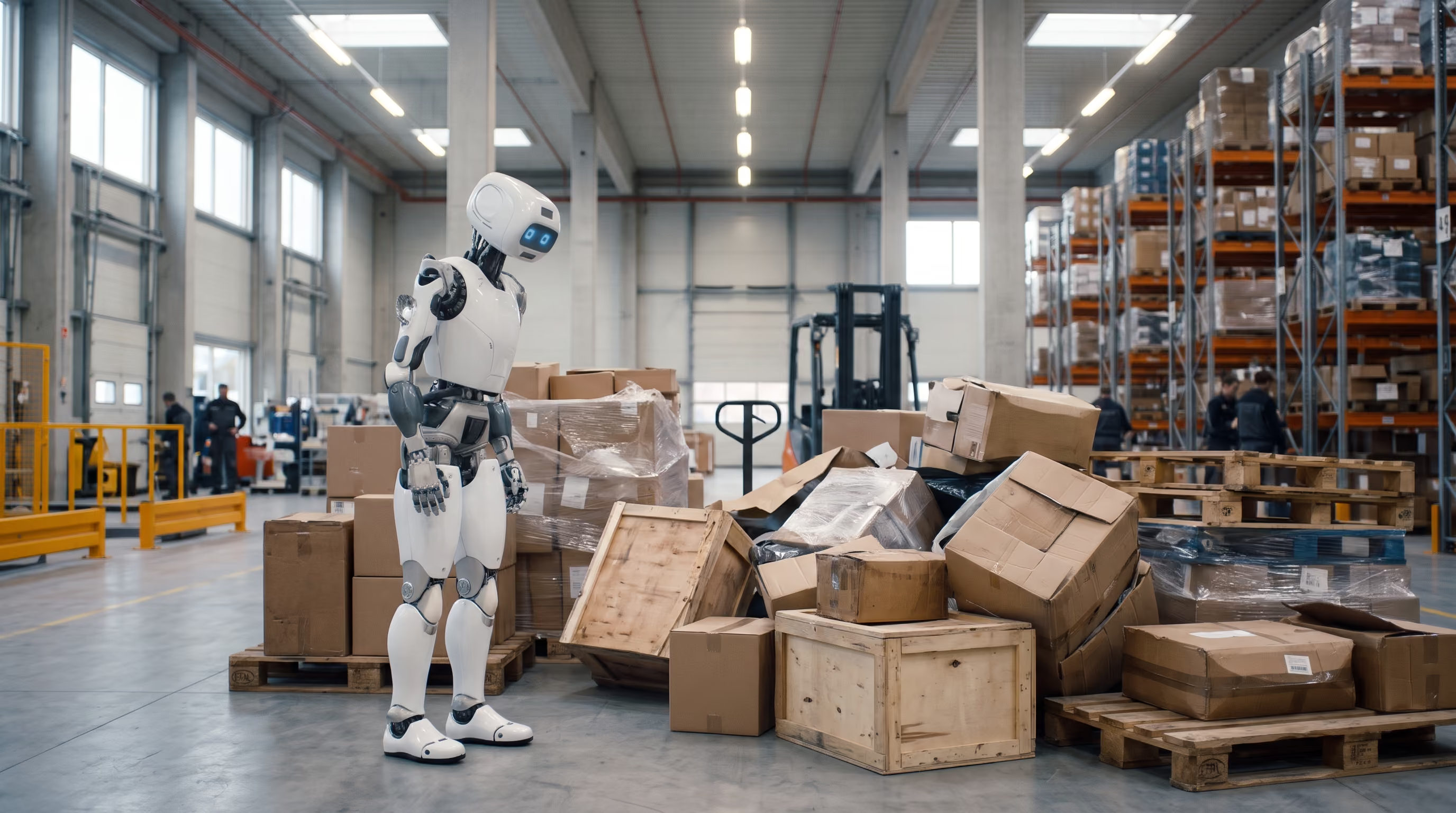
Language models learn from billions of publicly available texts. In contrast, every movement a robot is meant to learn must first be captured. Data on what work actually looks like in real-world warehouses and factories is particularly scarce: which tasks occur, how often they happen, how long they take, and where people have to dodge obstacles, wait, or perform heavy lifting. While robotics foundation models are evolving rapidly, they are only as good as the data used to train them. Those who better understand how physical work is actually performed will train better models.

DATA ORIGIN

What Data is Available Today?

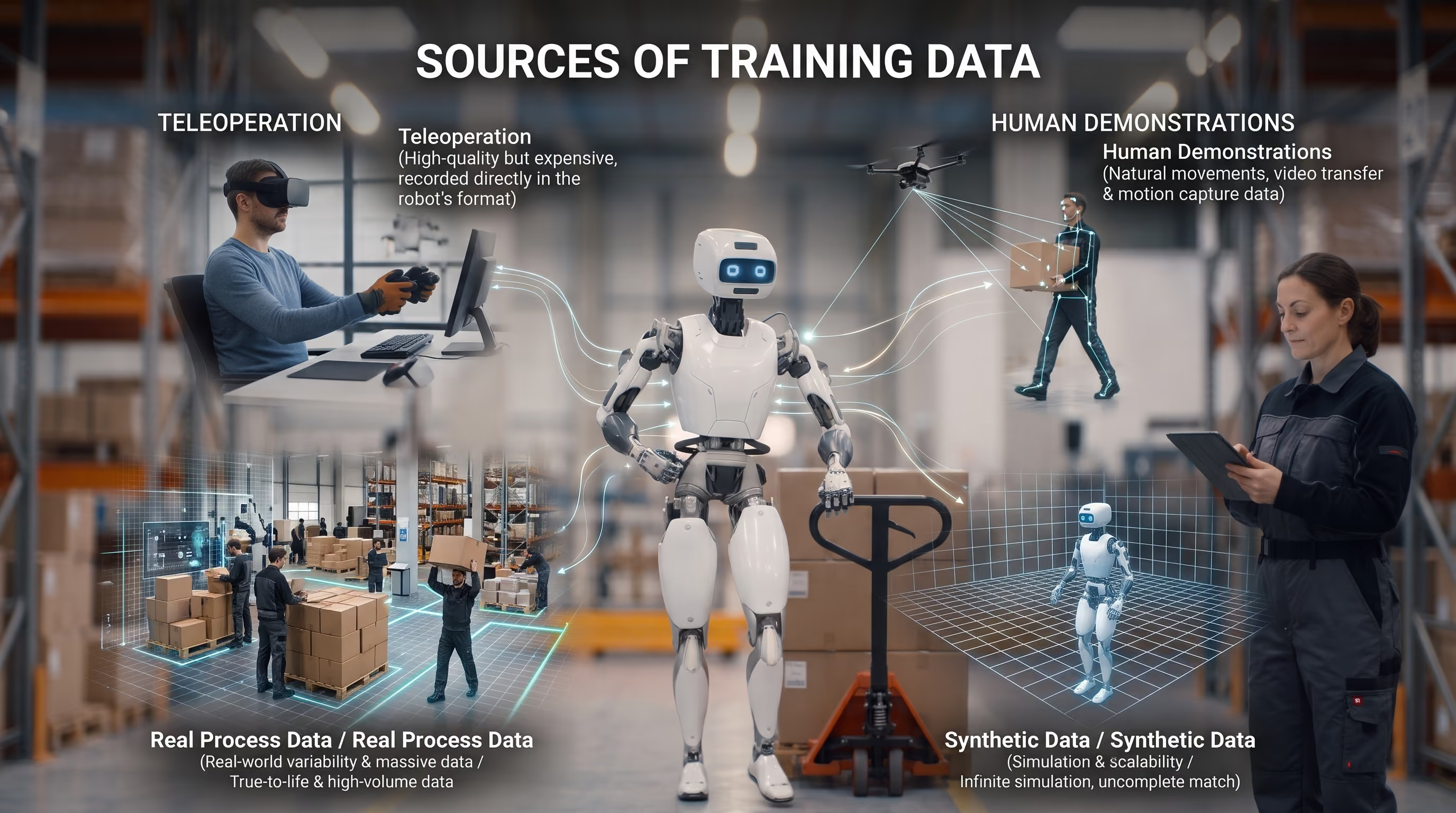
Today, robotics models learn from four types of data that differ significantly in quality, cost, and realism. With teleoperation, a human remotely controls the robot, and the system learns from the recorded movements. This data is high-quality and already in the robot's native format, but it is expensive, slow to generate, and tied to a specific robot model. Human demonstrations consist of videos and motion data of people performing a task. They capture natural movements and are well-suited for humanoid robots, though they must first be mapped to the robot's physical structure. Real-world process data shows how often, for how long, and under what conditions tasks are performed during actual operations. Its strength lies in its realism, offering genuine variability and large volumes of data; however, it requires access to active operational environments. Finally, synthetic data is generated in simulations or world models. It can be replicated infinitely and created safely, but without validation against real-world data, it only provides an incomplete representation of reality. In practice, these sources are combined: synthetic data augments real-world data, but it does not replace it.

INDUSTRIAL TRAINING DATA

What is Industrial Training Data?

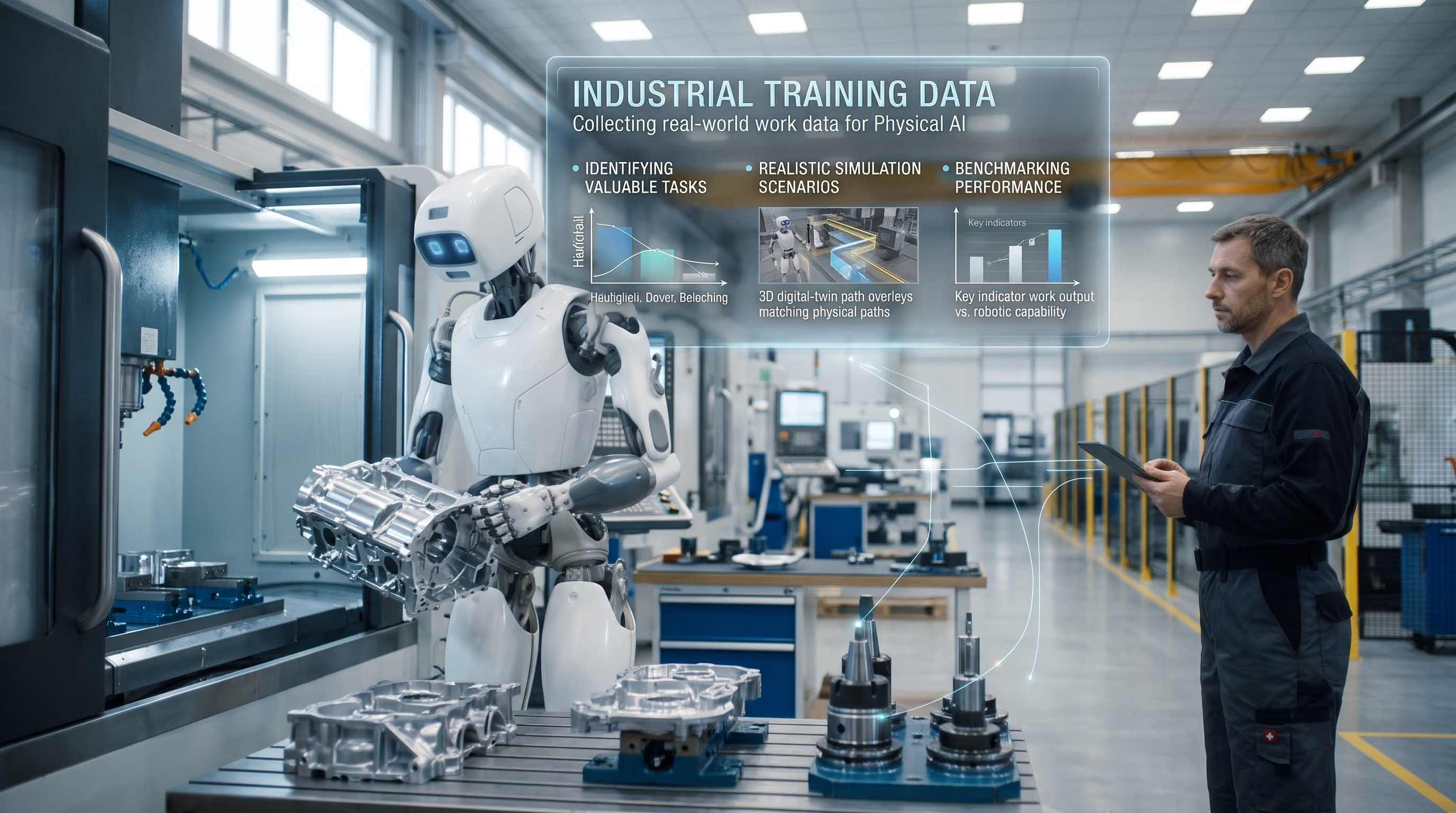
Industrial Training Data refers to training and reference data derived from real-world production and logistics operations, rather than from laboratory settings or simulations. Such data is valuable for Physical AI on several levels. First, it identifies which tasks are actually worth automating based on frequency, duration, and physical strain. Furthermore, it provides the workflows, paths, and variability needed to build simulation scenarios that accurately reflect the actual shop floor. Finally, it serves as a benchmark: the performance of a robot will ultimately be measured against the work as it is performed today.  

THE CURRENT LANDSCAPE

What is the Sim-to-Real Gap?

The sim-to-real gap is the difference between what a robot has learned in simulation and what actually works in the real world. No simulation perfectly replicates friction, material properties, or sensor noise. Methods such as domain randomization and fine-tuning with real-world data help bridge this gap.