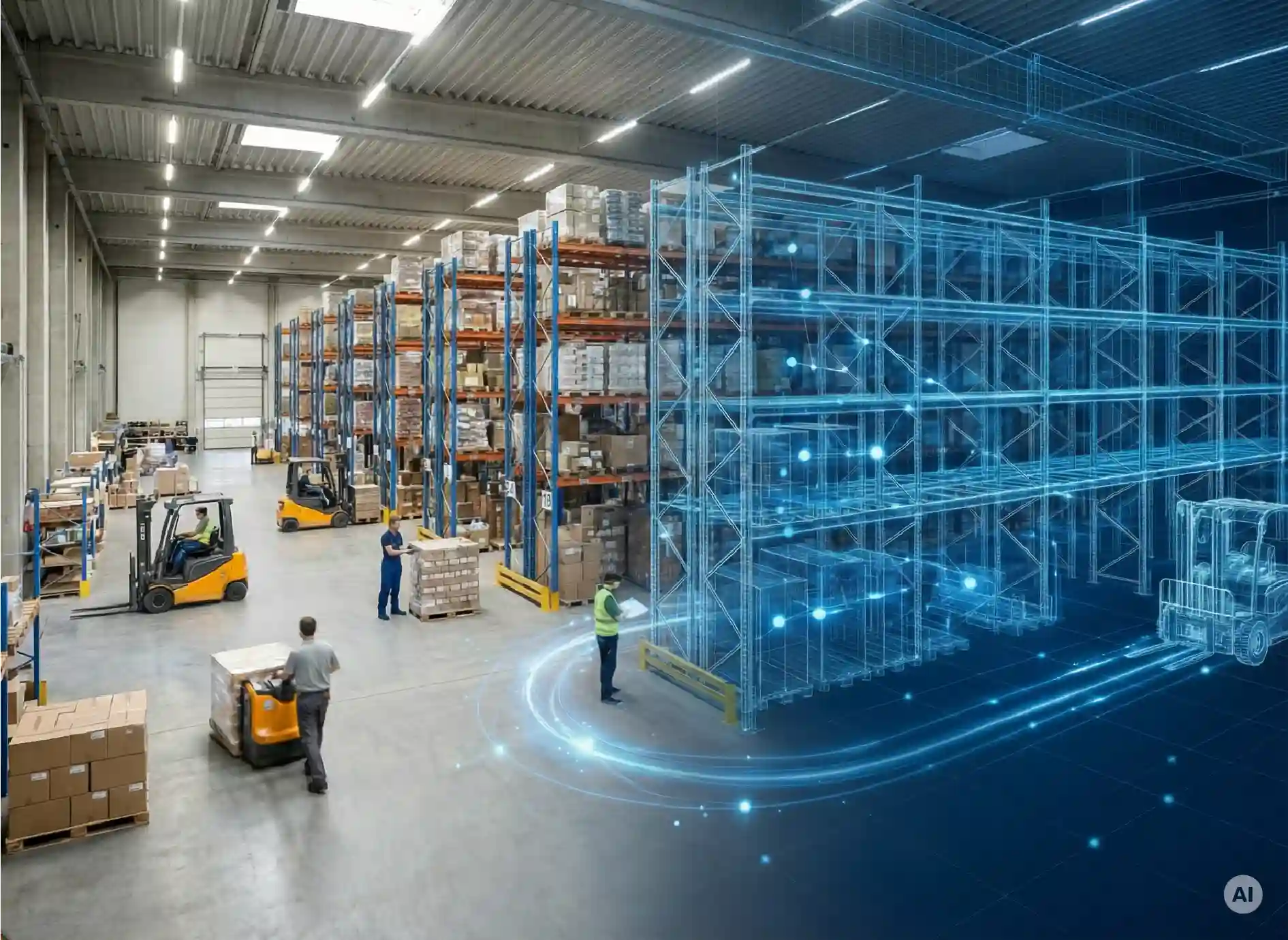
How Humanoid Robotics is Transforming Logistics & Manufacturing
Humanoid robots are generating a lot of buzz, but what can they actually achieve in logistics and production today? We explain how these systems work from a technical perspective, where they are already being used in pilot projects, the hurdles that still need to be overcome, and how companies can start preparing now.
11/10/2026
5
Minutes reading time
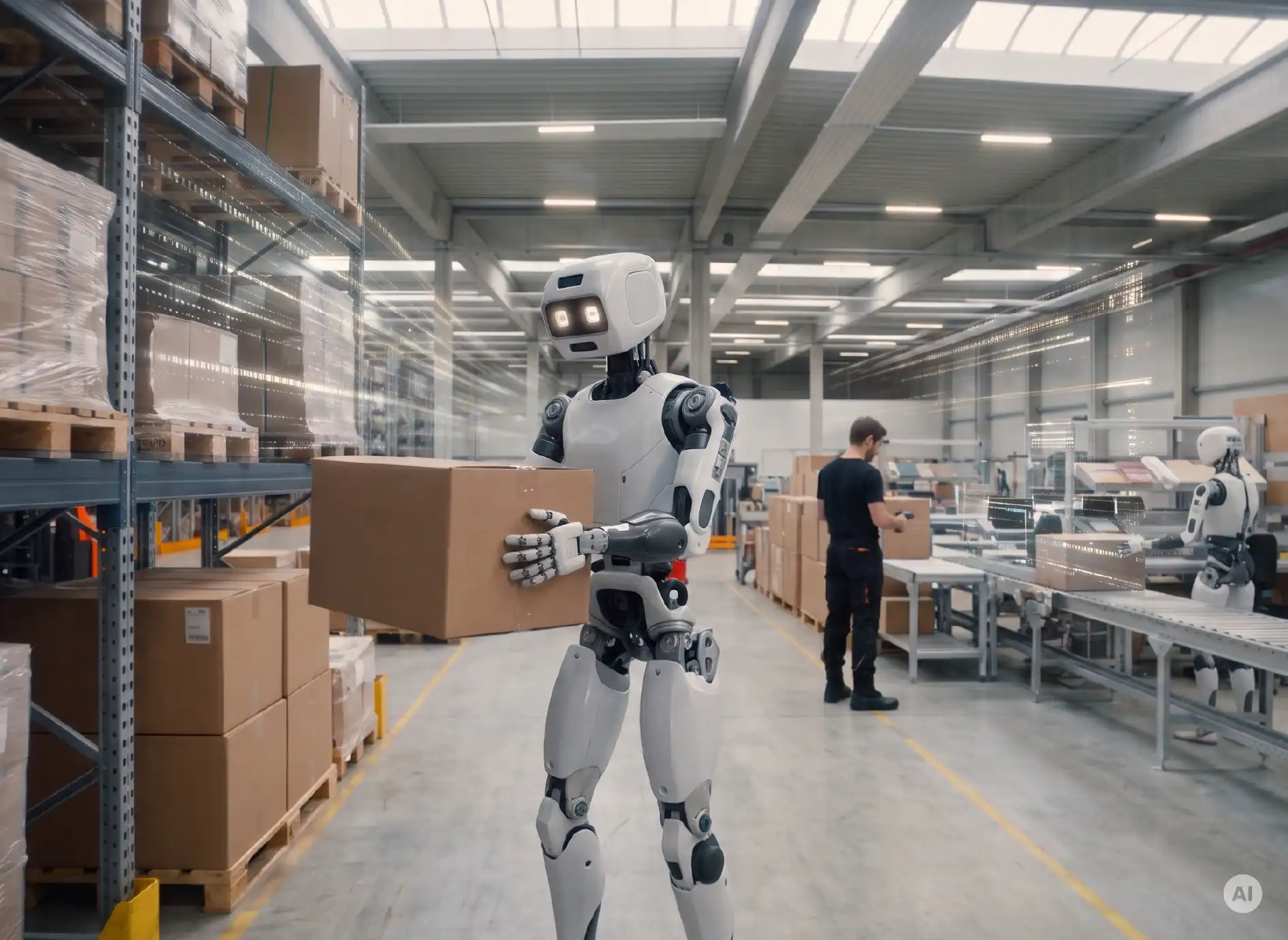
Hardly any topic in robotics is currently generating as much attention as humanoid robots. Videos of machines carrying boxes, stocking shelves, or inserting parts into an assembly line are going viral by the millions. At the same time, tech giants, automakers, and venture capitalists are investing billions in their development.
For decision-makers in logistics and production, one question stands out: What can humanoid robots actually do today, and when will they become relevant for your own operations? In this article, we explain what defines humanoid robotics, how these systems work technically, where they are already being tested, and what hurdles still need to be overcome.
What are Humanoid Robots? A Definition
Humanoid robots are robots whose physical structure is modeled after the human body: featuring a torso, head, two arms with hands, and usually two legs. The goal is not visual resemblance, but the ability to move through environments and use tools designed for humans.
In addition to bipedal models, there are also variants with a human-like upper body on a mobile base. These forgo walking in favor of greater energy efficiency and stability. Both designs are currently being tested in industrial settings.
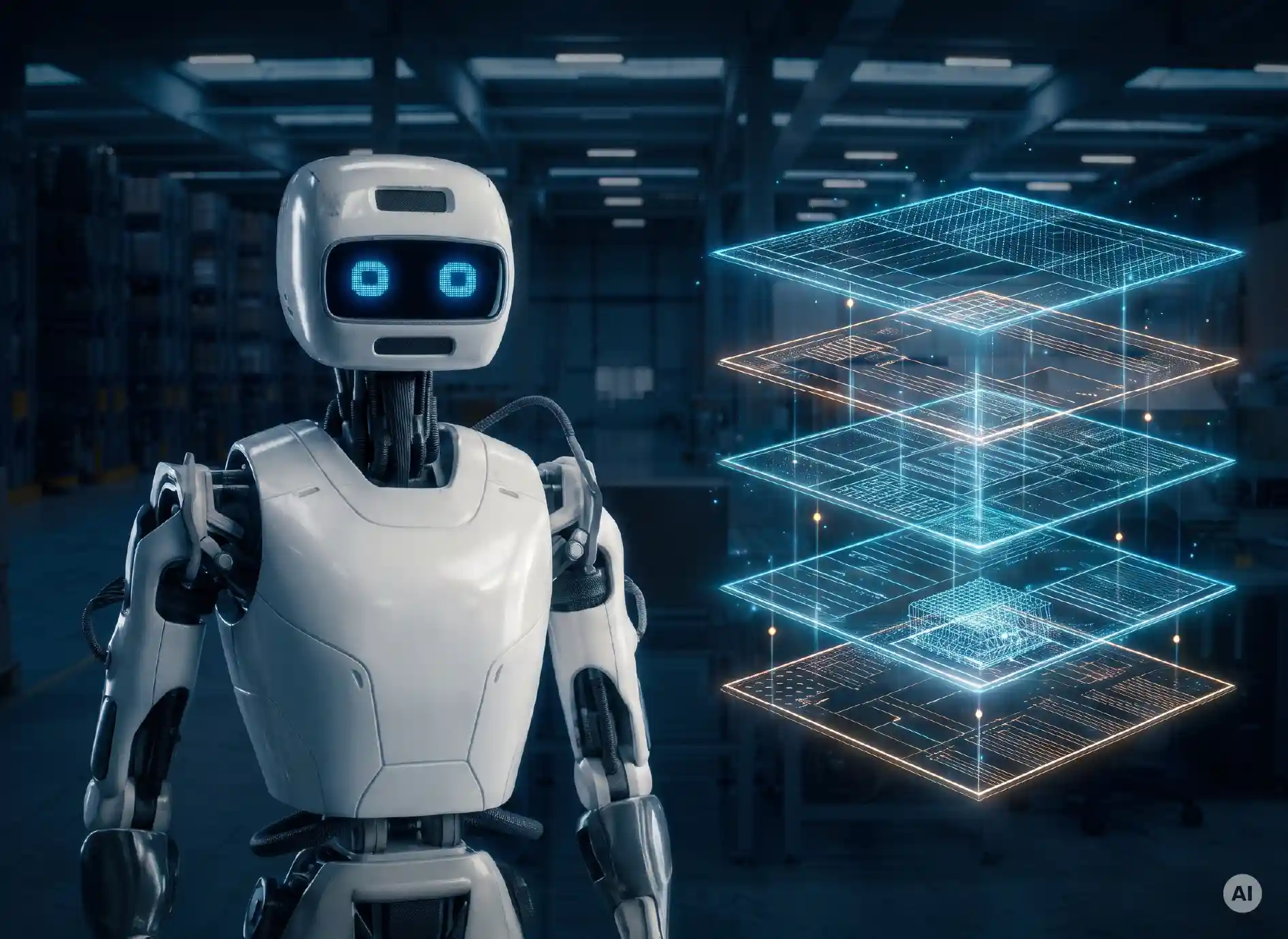
Humanoid robots are arguably the most demanding application of Physical AI: they combine all layers of the Physical AI stack into a single body. We explain what lies behind these layers in detail in our article The Physical AI Stack.
The strongest argument for humanoid robots is the environment: factories and warehouses are built for humans. Stairs, shelf heights, door handles, workstations, and tools are all designed for the human body. A robot with human-like proportions can theoretically integrate into existing workflows without the need to modify the facility.
There are two additional arguments:
Versatility: A classic industrial robot is optimized for a single task. A humanoid is intended to perform many different activities using the same hardware, depending on the skills its software has learned.
Learning from humans: Because their body structure and movements are similar, human demonstrations and motion data can be more easily transferred to the robot.
In fairness, there are also counterarguments. For many tasks, specialized solutions such as automated guided vehicles, robotic arms, or automated small-parts storage systems are faster, cheaper, and more reliable. Humanoid robots will not replace these systems. Their potential lies in tasks that have previously been too variable, too granular, or too distributed to be automated economically.
How a Humanoid Robot is Technically Structured
At its core, a humanoid robot is a physical AI system in human form: its body, senses, and a learning "brain" must work together in real time. The most important components are:
Body and actuators: A humanoid robot typically has several dozen joints, known as degrees of freedom. Each of these requires an actuator consisting of a motor, gearbox, and sensors. These actuators must be compact, powerful, and compliant enough to interact safely with people and objects.
Hands: The hand is one of the greatest technical challenges. To use tools or grasp various parts, it requires many degrees of freedom, force sensing, and tactile sensors in a very confined space. For this reason, many providers also rely on simpler grippers for industrial tasks.
Balance and locomotion: Bipedal walking requires constant balance control. Today, this control is often trained in simulations using reinforcement learning and then transferred to the actual robot.
Perception: Cameras, depth sensors, and sometimes LiDAR capture the environment, while inertial sensors and joint encoders track the robot's own position and movement.
The "brain": Robotics foundation models, such as vision-language-action models, process images and instructions to generate movements. They run on a powerful edge computer located directly inside the robot.
Energy: The battery limits operating time. For multi-shift operations, solutions such as fast charging or automatically swappable batteries are being developed.
Current Status: Where Humanoid Robots are Already Working
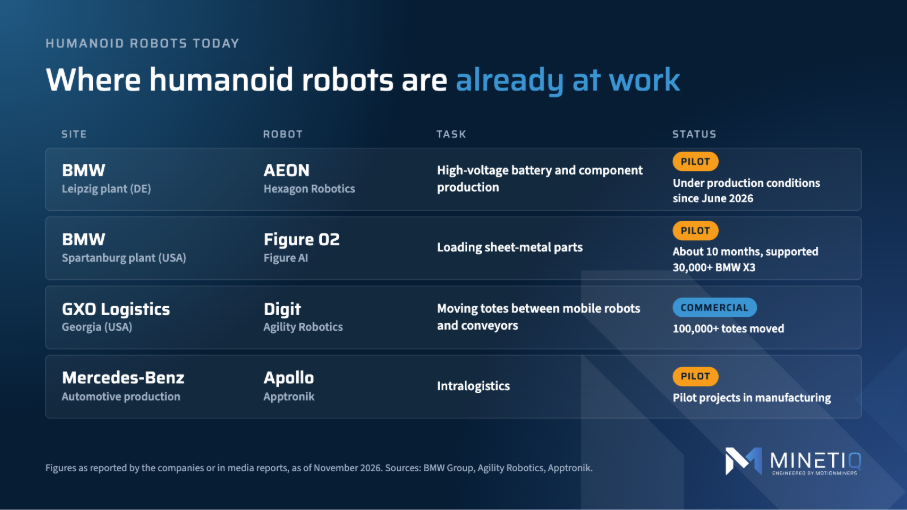
Humanoid robots have made the leap from trade show stages to real factory floors, but they are working almost exclusively in pilot projects with small fleets and clearly defined tasks. The most well-known examples:
The pilot project in Leipzig is particularly relevant for the German market: according to BMW, it is the first deployment of humanoid robots in the group's European vehicle production. The robots' batteries last for about three to four hours depending on the task and are swapped automatically (Source).
It is striking which tasks are currently being taken over: moving containers, inserting parts, and providing materials. These are repetitive tasks in structured environments, not complex assembly. Furthermore, many performance figures come from the manufacturers themselves; independent data on cycle times, failure rates, and cost-effectiveness are still rare.
The Biggest Obstacles on the Path to Regular Operation
There are still several unresolved challenges between a successful pilot project and the deployment of hundreds of robots in shift operations.
Reliability: In regular operation, it does not matter if a robot can perform a task once but whether it can perform it thousands of times without error. Downtime and errors determine cost-effectiveness.
Generalization: Today's systems are good at mastering individual, trained tasks. Switching to new parts, new processes, or changed environments often still requires additional training.
Hands and hardware: Dexterous, robust, and affordable hands, as well as long-lasting actuators, remain technically demanding.
Safety and standards: A bipedal robot that can fall poses different functional safety requirements than a stationary industrial robot. Existing standards are only partially designed for this, and corresponding standards for mobile, bipedal robots are still being developed.
Costs and economic viability: Acquisition, integration, and maintenance costs must be competitive compared to alternatives. Many providers are therefore opting for rental models (Robots-as-a-Service).
Data: Robotics models require vast amounts of realistic training data. Information on how work actually unfolds in real-world facilities is scarce and represents one of the most critical levers for improving these systems.
The industry is evolving rapidly in all these areas. Nevertheless, it is realistic to expect that widespread adoption will occur in stages: from individual tasks to larger fleets, and eventually to versatile, multi-purpose systems.
What Companies can Do Now
For most businesses, humanoid robots are not yet a product to purchase, but the time to prepare is now. Waiting until these systems are widely available means losing valuable time. Three steps can help:
Understand your own operations: Which manual tasks occur, how often, how long do they take, and how physically demanding are they? Only objective process data can reveal where a humanoid robot would actually make sense.
Evaluate candidates: Good entry-level tasks are repeatable, take place in structured environments, and are ergonomically taxing for humans, such as container handling or material supply.
Measure the baseline: By tracking times, distances, and physical strain today, you will be able to prove whether a robot actually delivers added value later on.
Conclusion
Humanoid robots are the most visible form of Physical AI and also its most demanding. Initial pilot projects at BMW, GXO, and Mercedes-Benz demonstrate that the technology can function in real-world facilities, currently for narrowly defined tasks. Reliability, safety, cost, and, above all, data from the real-world work environment are the deciding factors for the next step.
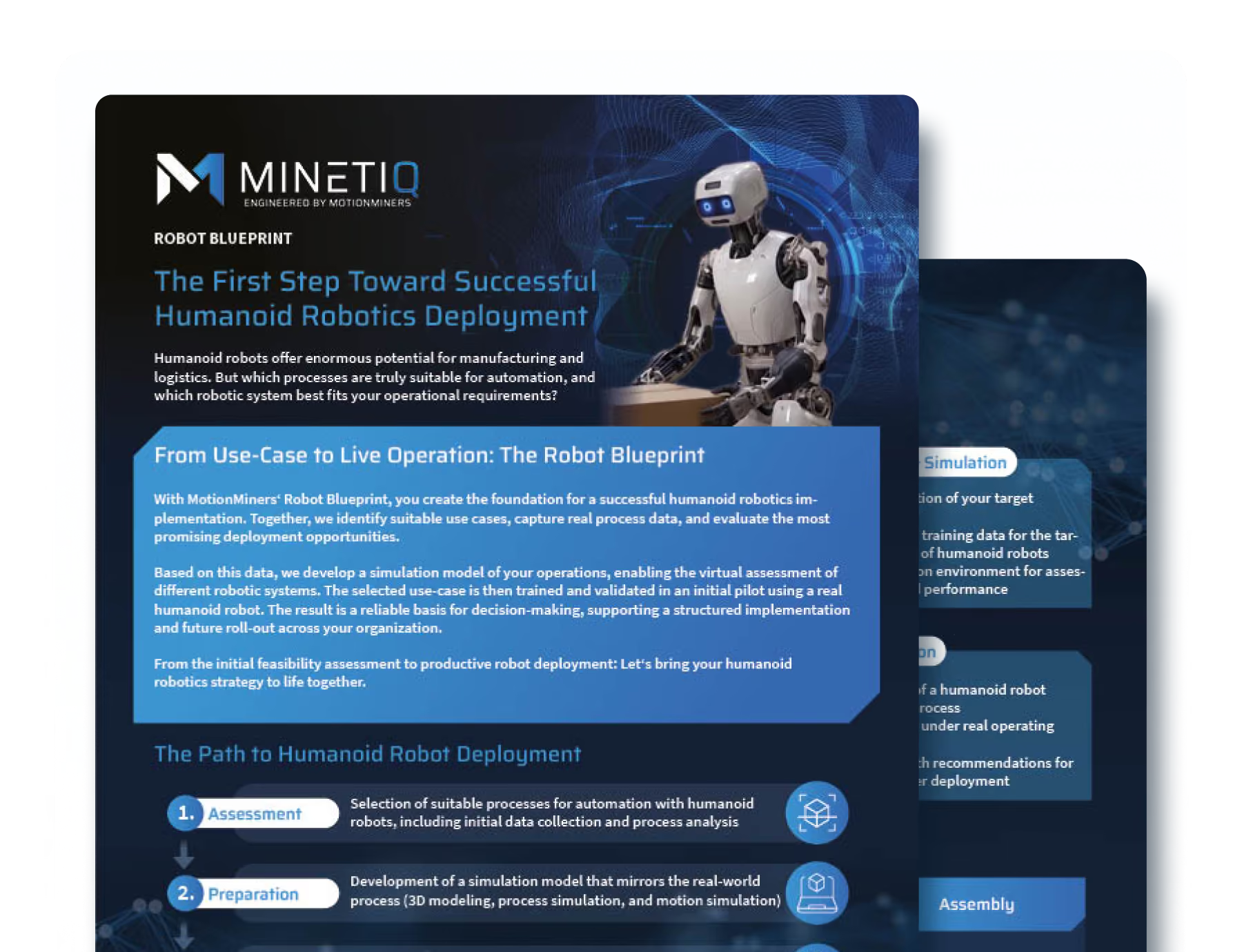
Would you like to know which of your processes are suitable for humanoid robots?
Our free factsheet shows you how to implement humanoid robotics in production and logistics with confidence: from process analysis to full-scale deployment.
From use case to live operation
An overview of results from every project phase
Concrete use cases for intralogistics, production, and assembly